In the era of Industrial 4.0 and Smart Cities, the demand for high-precision gas sensor detectors has transcended basic safety. Today, as a leading gas sensor manufacturer, we recognize that our products serve as the "digital nose" for modern infrastructure. From the petrochemical complexes in the Middle East to the high-rise smart apartments in Southeast Asia, gas safety is a multi-dimensional challenge involving flammable gases, toxic vapors, and oxygen monitoring.
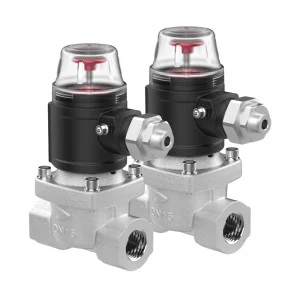
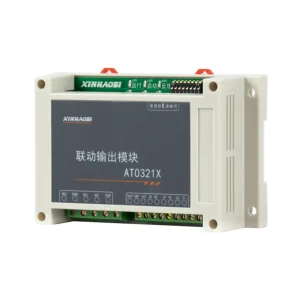
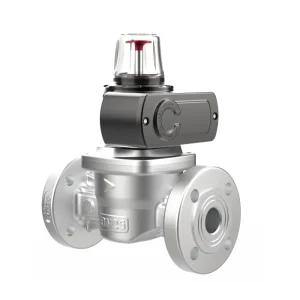
The global gas sensor market is projected to reach USD 1.8 billion by 2030. This growth is driven by stringent occupational health and safety (OHS) regulations and the surging "Hydrogen Economy." Industrial facilities now require End-to-End Solutions that integrate detectors with automated solenoid shut-off valves and cloud-based monitoring controllers. As a professional supplier, Xinhaosi bridges the gap between raw sensor data and actionable safety protocols.
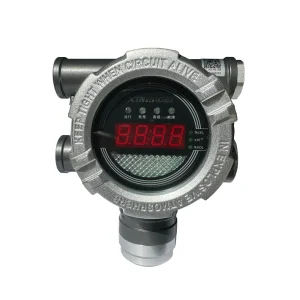
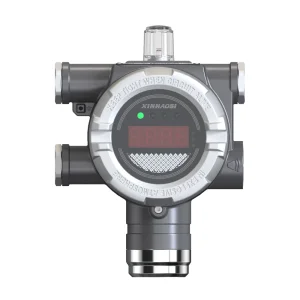
Smart sensing for urban gas grids, ensuring early detection of methane leaks in dense metropolitan areas to prevent catastrophic events.
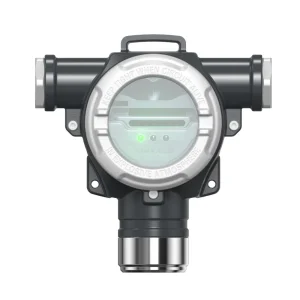
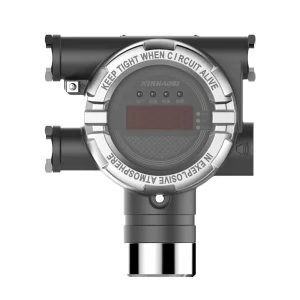
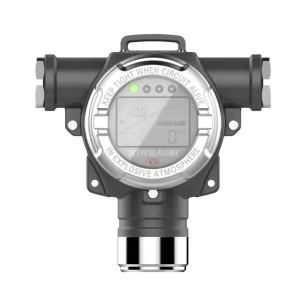
Explosion-proof combustible gas detectors (Ex-d grade) designed for the harsh environments of refineries and offshore platforms.
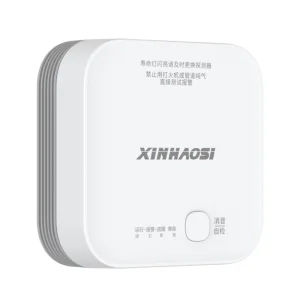
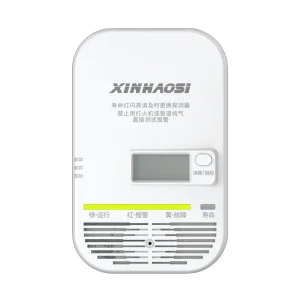
IoT-enabled household detectors that provide mobile alerts and local alarms for LPG and Natural Gas safety.
Why choose a China Gas Detector Manufacturer? The answer lies in the "Full-Chain Integration." Unlike western suppliers who often outsource components, Chinese manufacturers like Xinhaosi control the entire lifecycle: from the synthesis of sensor materials to the injection molding of explosion-proof housings. This results in:
We are witnessing a shift from "Reactive" to "Predictive" safety. The next generation of gas sensor detectors will utilize uncooled infrared technology and AI algorithms to filter out "false positives" caused by humidity or cross-sensitive gases. Xinhaosi is at the forefront of this, launching handheld uncooled infrared gas leak detectors that allow for long-distance, non-contact monitoring.
Founded in 2003, Xinhaosi has evolved into a powerhouse of gas safety technology. "X" is not just a letter; it represents the Unknown Risks we make visible and the Next-Gen Technology we employ to neutralize them.

We work with global leaders in energy, construction, and municipal management. Our solutions are deployed in Indonesia, Sichuan, and beyond, fostering international cooperation through industrial matchmaking and cross-border e-commerce.



Ensure the manufacturer holds ATEX, IECEx, or local GB certifications for explosion-proof safety. SIL2 (Safety Integrity Level) is mandatory for high-risk industrial applications.
A high-quality sensor must distinguish between the target gas (e.g., Methane) and interfering substances (e.g., alcohol vapors or CO) to prevent costly false alarms.
Look for sensors with a lifespan exceeding 3-5 years and low drift characteristics. Ease of field calibration is a critical factor for reducing O&M costs.
A: Most of our industrial-grade detectors achieve a T90 response time of <30 seconds for combustible gases. This rapid detection is critical for triggering automatic shut-off valves before the Lower Explosive Limit (LEL) is reached.
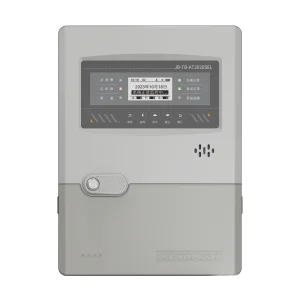
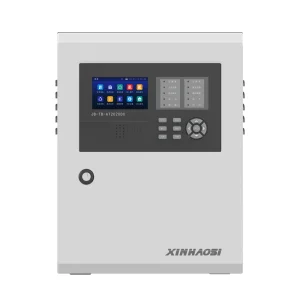
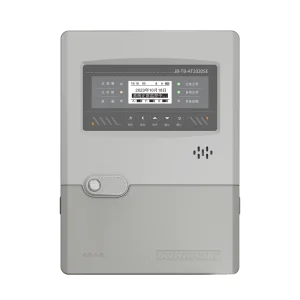
A: Yes. Our controllers, such as the JB-TB-AT2020DX, support standard Modbus RS485 and 4-20mA analog outputs, allowing seamless integration with most DCS and BMS platforms for centralized safety monitoring.
A: For industrial safety, we recommend calibration every 6 to 12 months. Our latest models feature "One-Key Calibration" to simplify the process for technicians on-site.
A: Electrochemical sensors are typically used for toxic gases (CO, H2S) at low concentrations (ppm), while catalytic combustion sensors are the gold standard for monitoring flammable gas concentrations in the LEL range.