1 / 1

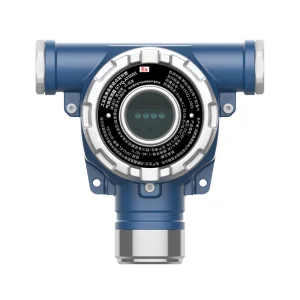
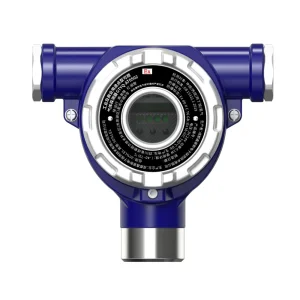
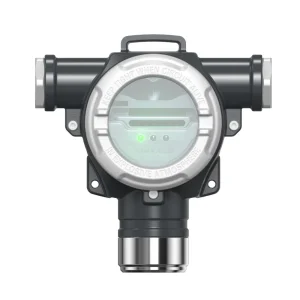
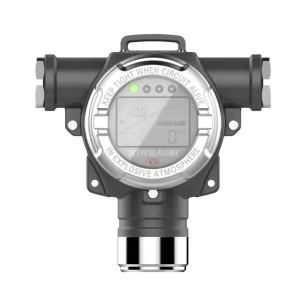
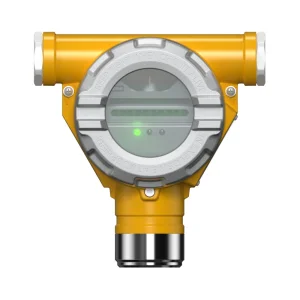
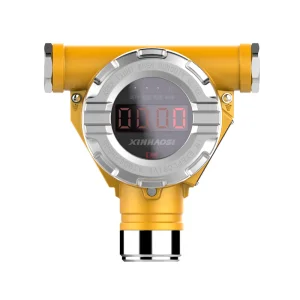
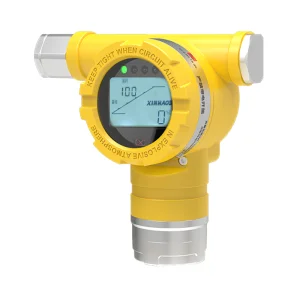
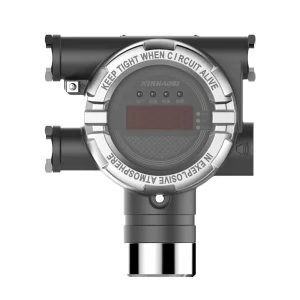
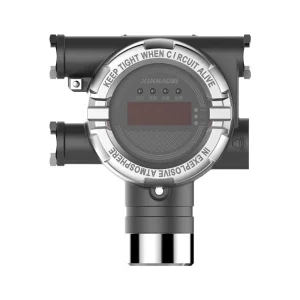
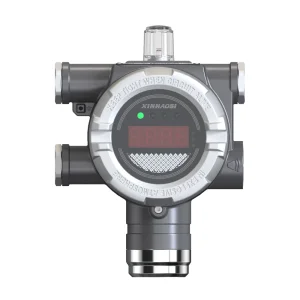
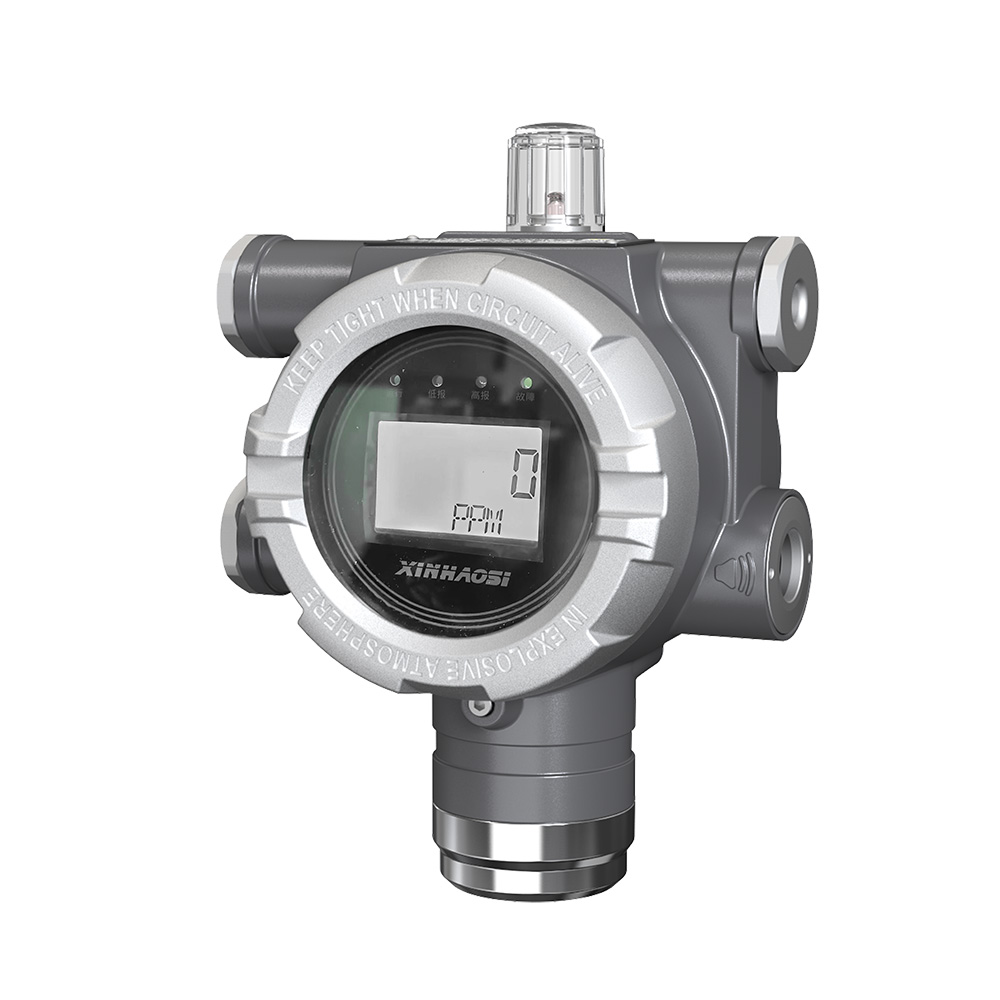
The XP4000P is a premium programmable explosion-proof multi-gas detector, representing an upgraded version of the XP4000 for high-end intelligent safety monitoring. It adopts a professional explosion-proof and dust-ignition-proof design, guaranteeing safe operation in explosive and dusty hazardous areas. Using a three-wire terminal interface, it ensures convenient and reliable wiring, suitable for standardized industrial installation. The digital sensor assembly supports plug-and-play replacement without on-site calibration, maintaining high precision and reducing maintenance workload. With an IP66 ingress protection grade, it performs stably in harsh environments including dust, moisture and water splashing. It is equipped with a segment LCD display, offering clearer and more comprehensive data presentation than traditional digital tubes. The standard expansion port supports 4-20mA, HART, RS485 and relay output, ensuring high system compatibility. The biggest upgrade lies in its three-channel programmable relay outputs, with configurable interlock functions to meet diverse linkage control requirements. It provides more flexible and intelligent safety solutions for high-end applications such as fine chemical industry, semiconductor manufacturing and modern intelligent industrial parks, achieving precise monitoring and efficient risk control.
| Model | XP4000P |
| Measuring gas | Oxygen / Toxic / VOC gases |
| Measuring method | Electrochemical / Infrared / PID / Semiconductor |
| Measuring Range | Depend on sensor type |
| Response time | Depend on sensor type |
| Operation mode display | Normal / High Alarm / Low Alarm / Trouble LED |
| Measuring value display | LCD |
| Power | 24V DC |
| Alarm signal output | Light and sound alarm output, 50mA |
| Output signal | Analog 4-20mA 3-wire |
| Relay output | Three-channel programmable relay output |
| Conduit connection | Standard: 3xM26x1.5P | Option: FPT3/4", NPT3/4" |
| Mounting type | Wall / Pole / Ceiling mount |
| Operating temperature |
Infrared: -40°C ~ +70°C Electrochemical: -20°C ~ +50°C PID: -20°C ~ +55°C |
| Operating humidity | 5 to 95% RH (Non-condensing) |
| Housing Material | Aluminum alloy |
| Dimensions | 172(W) x 161(H) x 79(D) mm |
| Explosion Proof | Ex db IIC T6 Gb |
| Certification | Standard Compliant (refer to technical documentation) |
| Sensor Type | Measuring Gas | Molecular Formula | Measuring Range | Operating Temperature | Typical Life | Response Time |
|---|---|---|---|---|---|---|
| Infrared Type | Combustible gases | / | 3-100% LEL | -40~+70°C | 60 month | <30sec / 90% scale |
| Carbon dioxide | CO₂ | 0~2% vol | -40~+70°C | 60 month | <45sec / 90% scale | |
| Nitrous oxide | N₂O | 0-1000 ppm | -40~+70°C | 60 month | <45sec / 90% scale | |
| Electrochemical Type | Carbon Monoxide | CO | 0-50 ppm | -20~+50°C | 24 month | <10sec / 90% scale |
| Hydrogen Sulfide | H₂S | 0-20 ppm | -20~+50°C | 24 month | <12sec / 90% scale | |
| Sulfur dioxide | SO₂ | 0-20 ppm | -20~+50°C | 24 month | <10sec / 90% scale | |
| Ammonia | NH₃ | 0-100 ppm | -20~+50°C | 24 month | <50sec / 90% scale | |
| Oxygen | O₂ | 0~30% vol | -20~+50°C | 24 month | <15sec / 90% scale | |
| Formaldehyde | CH₂O | 0-2 ppm | -20~+50°C | 24 month | <15sec / 90% scale | |
| Chlorine | Cl₂ | 0-5 ppm | -20~+50°C | 24 month | <25sec / 90% scale | |
| Bromine | Br₂ | 0-5 ppm | -20~+50°C | 24 month | <60sec / 90% scale | |
| Hydrogen chloride | HCl | 0-15 ppm | -20~+50°C | 24 month | <30sec / 90% scale | |
| Hydrogen Fluoride | HF | 0-7 ppm | -20~+50°C | 18 month | <30sec / 90% scale | |
| Hydrogen Bromide | HBr | 0-10 ppm | -20~+50°C | 24 month | <70sec / 90% scale | |
| Hydrogen Cyanide | HCN | 0-3 ppm | -20~+50°C | 24 month | <10sec / 90% scale | |
| Nitrogen Dioxide | NO₂ | 0-20 ppm | -20~+50°C | 24 month | <20sec / 90% scale | |
| Nitric oxide | NO | 0-20 ppm | -20~+50°C | 24 month | <30sec / 90% scale | |
| Silane | SiH₄ | 0-15 ppm | -20~+50°C | 24 month | <60sec / 90% scale | |
| Ethylene oxide | C₂H₄O | 0-20 ppm | -20~+50°C | 24 month | <25sec / 90% scale | |
| Vinyl chloride | C₂H₃Cl | 0-10 ppm | -20~+50°C | 24 month | <90sec / 90% scale | |
| Carbon disulfide | CS₂ | 0-5 ppm | -20~+50°C | 24 month | / | |
| Acrylonitrile | C₃H₃N | 0-2 ppm | -20~+50°C | 24 month | <30sec / 90% scale | |
| Carbonyl chloride (phosgene) | COCl₂ | 0-1 ppm | -20~+50°C | 24 month | <30sec / 90% scale | |
| *Photoionization (PID) Type | Volatile organic compounds | VOCs | 0-2000 ppm | -40~+60°C | 12 month | <5sec / 90% scale |
| Semiconductor Type | Organic combustible vapors | / | 0~2000 ppm | -40~+60°C | 36 month | / |
| Freon and halogenated compounds | / | 0~2000 ppm | -40~+60°C | 36 month | / |
| Semiconductor Type | High Sensitivity: Detects low-concentration gases with noticeable changes in electrical signals. |
| Fast Response: Rapid alteration of semiconductor electrical conductivity upon gas adsorption enables quick detection. | |
| Broad-Spectrum: Detects most volatile organic compound (VOC) vapors. | |
| Long Service Life & Cost-Effectiveness: Featuring a simple structure and low manufacturing cost, it delivers stable long-term performance, making it ideal for cost-sensitive applications. | |
| Infrared (IR) Type | Advanced Dual-Compensation Technology: Employs Non-Dispersive Infrared (NDIR) technology with dual detectors (measurement and reference channels) to compensate for environmental interference, significantly improving detection accuracy. |
| High Sensitivity & Strong Stability: Operates based on the characteristic absorption of specific infrared wavelengths by gases, unaffected by oxygen concentration levels. | |
| No Risk of Sensor Poisoning: No chemical reactions occur during detection, preventing sensor degradation due to gas exposure. | |
| Low Power Consumption: Suitable for long-term continuous monitoring. | |
| Operates in Oxygen-Free Environments: Functions effectively without the need for oxygen participation. | |
| Fast Response, Low Maintenance, Long Lifespan: Simple mechanical design ensures minimal performance degradation over time, maintaining reliable operation. | |
| Electrochemical Type | High Precision (ppm-Level Detection): Capable of detecting extremely low concentrations of toxic gases, typically with detection limits at the ppm level. |
| Linear Output: Exhibits a linear relationship between gas concentration and signal output, facilitating straightforward quantitative analysis. | |
| High Selectivity: Designed with gas-specific electrode reactions to resist cross-interference (e.g., CO-specific electrodes show minimal response to hydrogen). | |
| Stable Performance: Minimal long-term drift. | |
| Photoionization (PID) Type | Extremely High Precision (ppb~ppm-Level): Detects extremely low concentrations of VOCs. |
| Linear Output: Concentration and signal show a linear correlation, enabling precise measurements. | |
| Fast Response: Instantaneous detection of signal changes when UV light excites gas molecules to produce ions. | |
| Broad-Spectrum: Suitable for most volatile organic compounds (VOCs) (e.g., benzene series, halogenated hydrocarbons, alcohols, ketones, etc.). |