High-Quality Safety Shut Off Manufacturers & Factories

Industry-Leading Engineered Solutions for Automated Gas Detection, Rapid Emergency Isolation, and Global Hazard Mitigation

Industrial Safety Systems Showcase

Precision engineered safety shut-off systems, controllers, and explosion-proof gas detectors built to global certification standards.
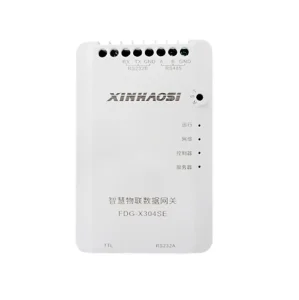
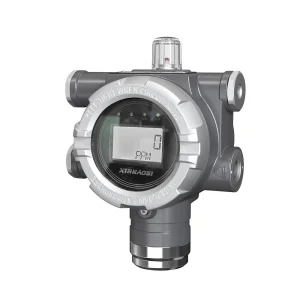
OEM FDG-X304SE Intelligent Data Gateway

OEM FDG-X304SE Intelligent Data Gateway Supplier, Factory

View Details
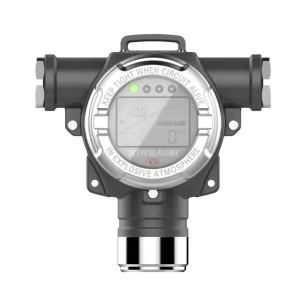
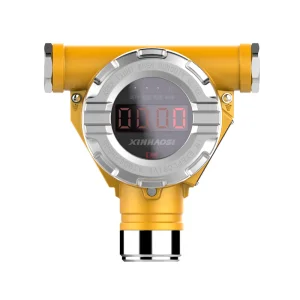
XP4000P Explosion-Proof Gas Detector

High-Quality China XP4000P Explosion-Proof Oxygen, Toxic, and VOC Gas Detector - Leading Suppliers & Factory Manufacturers, Factories

View Details
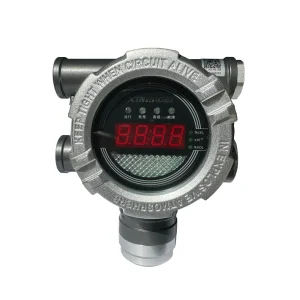
OEM GTYQ-AT0503/d Combustible Gas Detector

OEM GTYQ-AT0503/d Explosion Proof Combustible Gas Detector Manufacturer, Factory

View Details
OEM XP4000P Gas Detector

OEM China Suppliers Factory XP4000P Explosion Proof Oxygen Toxic VOC Gas Detector for Safety Applications Manufacturers, Factory

View Details
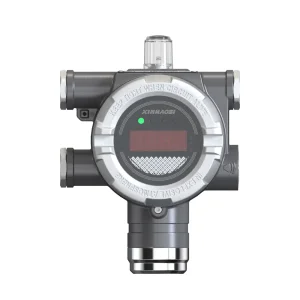
GTYQ-AT0602 Combustible Gas Detector

High-Quality Explosion Proof Combustible Gas Detector GTYQ-AT0602 - Reliable China Suppliers and Factory Solutions Manufacturers, Factories

View Details
GTYQ-AT0602A Gas Detector

High-Quality GTYQ-AT0602A Explosion Proof Combustible Gas Detector Supplier, Manufacturers

View Details
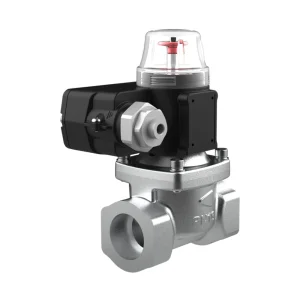
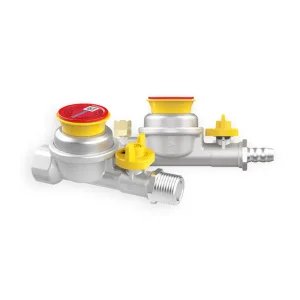
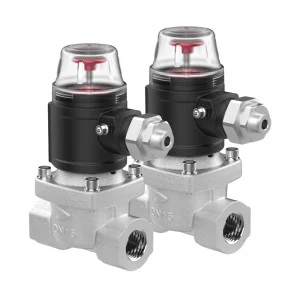
XF5III Series Gas Solenoid Valve

High-Quality Industrial Gas Solenoid Valve Normally Opened XF5III Series Supplier, Factories

View Details
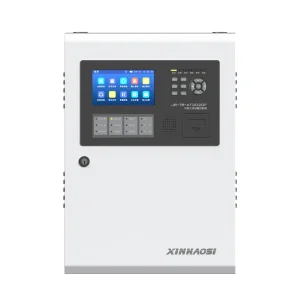
JB-TB-AT2020F Gas Detector Controller

OEM China JB-TB-AT2020F Gas Detector Controller - Reliable Solutions from Leading Suppliers & Factory Supplier, Manufacturer

View Details

The Evolution of Safety Shut-Off Technology

A Comprehensive White Paper on Industrial Safety and Fail-Safe Gas Systems

20+
Years Experience
SIL-2
Safety Rated
100%
Fail-Safe Checked
50+
Global Partners

1. Executive Summary & Market Landscape

In the contemporary industrial ecosystem, safety shut-off systems act as the primary defense against catastrophic infrastructure failure, hazardous emissions, and accidental ignition. As chemical processing facilities, public gas networks, power generation stations, and municipal distributions scale globally, the demand for high-reliability shut-off valves and synchronized electronic detection systems has surged. Driven by evolving global regulations such as the ATEX Directive, IECEx standards, and OSHA guidelines, manufacturers have shifted from mechanical components to integrated, intelligent, and certified hazard-prevention architectures.

Xinhaosi Electronic Detection Technology Co., Ltd. (established in 2003) represents the vanguard of this transition. By coupling robust solenoid valve actuators with state-of-the-art gas and flame detectors, the company provides automated loops that detect combustible or toxic leaks, process the signal via smart gateway controllers, and trigger instantaneous valve isolation. This cohesive technology loop minimizes dependencies on manual operator responses, mitigating human error during critical failure moments.

"The primary index of modern safety systems is no longer just isolation strength, but the deterministic mitigation time: the duration from initial trace gas sensing to absolute valve closure."

2. Industrial Safety Shut-Off Valve Topologies

Industrial gas solenoid valves function as the mechanical executioners of safety instructions. Understanding the design configurations of these valves is essential for field engineers and global procurement heads:

  • Normally Open (NO) Valves (e.g., XF5III, KT-XF5 Series): These valves require a brief electrical pulse to shut off and seal. Once closed, they remain locked mechanically until an authorized technician performs a manual reset. This prevents automatic line resumption before a leak cause is established and cleared, a critical requirement under SIL protocols.
  • Direct-Acting vs. Pilot-Operated Solenoids: Direct-acting models leverage the magnetic force of the actuator directly on the plunger to seal the seat, ideal for low-pressure systems. Pilot-operated models utilize line pressure differentials to facilitate sealing, permitting integration into high-throughput municipal pipelines.
  • Material Selection for Corrosive Environments: High-quality factories process housings from brass alloys, carbon steel, and SUS316 stainless steel to ensure zero structural fatigue when exposed to sour gas (H2S), moisture, or industrial chemical vapors.

X represents Unknown Risks & Next-Gen Safety

The letter "X" stands at the center of Xinhaosi’s safety ethos. It defines the unpredictable variables in hazardous environments—undetectable toxic emissions, micro-leaks, and temperature swings. Simultaneously, it embodies Xinhaosi's forward-looking tech stack: Edge AI detection, IoT gateways, and robust solenoid enclosures designed to nullify those risks.

Through rigorous R&D, we convert toxic risks into visible, actionable data. With intelligent data gateways like the OEM FDG-X304SE, plant operators monitor real-time pressure gradients and atmospheric volatile organic compound (VOC) levels, allowing for automated early warnings.

X Safety Technology Visual
We utilize advanced electronic detection technology to make unknown gas leak risks clear and visible.

Core Engineering Pillars

Intelligent Integration

Closing the loop between gas detectors and emergency solenoid valves. Smart controller systems automatically shut valves upon target PPM detection.

ATEX / IECEx Certification

Explosion-proof casings (d-type flameproof and ia-type intrinsic safety) designed to prevent spark transmission in Category 1 & 2 gas-hazardous zones.

Rapid Isolation Timing

Ultra-fast solenoid mechanisms that trigger full physical sealing in under 1 second of electrical impulse signal delivery.

Macro Industrial Solutions for Total Safety

Integrating electronic sensing and mechanical shutdown to guard lives and pipelines across various sectors.
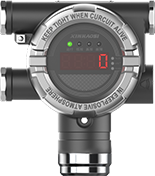
Industrial Gas & Flame Detection Systems

Industrial Gas & Flame

High-sensitivity precision sensing networks optimized for refineries, offshore oil rigs, and chemical storage depots.
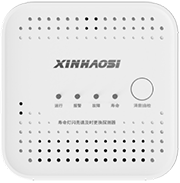
Household & Commercial Gas Detectors

Household & Commercial

Compact, highly reliable gas leakage alarms with local alarms and dry contact relay outputs for residential kitchens and hotels.
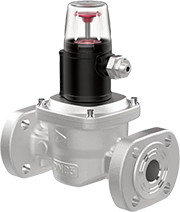
Industrial & Household Gas Solenoid Valves

Valves & Actuators

Robust electromagnetic valves constructed to seal gas pipelines instantly in case of earthquake, leak, or fire.
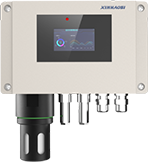
Urban Gas Distribution & Monitoring

Urban Gas & SCADA

Smart city integration featuring wireless data gateways linking remote valve chambers to main SCADA networks.

3. Global Procurement Trends & Engineering Demands

EPC (Engineering, Procurement, and Construction) companies and industrial procurement teams face strict regulatory guidelines when selecting safety shut-off equipment. In the modern market, procurement is driven by three main needs:

  1. Integrated Modbus/RTU Communication: Field devices cannot exist as isolated entities. Procurement specifies that gas detector controllers (like the JB-TB-AT2020F) must interface seamlessly with DCS (Distributed Control Systems) via RS485 loops, allowing remote control rooms to monitor real-time gas levels and override valve positions manually.
  2. Explosion-Proof Integrity: When deploying gas sensors (such as the XP4000P or GTYQ-AT0503/d) to volatile environments, housing construction must prevent internal ignition sparks from propagating to the external atmosphere. Die-cast aluminum and stainless steel housings with IP66 or IP67 ratings are required.
  3. Low Power Consumption & High Life Cycles: Electromagnetic coils in solenoid valves must be designed to handle long-term continuous energization (or pulsed energization for bistable valves) without overheating. This prolongs component life, reduces operational downtime, and saves energy across thousands of facility nodes.

4. Localized Support, Legal Compliance, & Standard Testing

Deploying safety hardware is subject to strict regional safety laws. Equipment installed in North America, Europe, or the Asia-Pacific region must comply with distinct but related regulatory systems.

For instance, industrial gas detectors must undergo testing to verify cross-sensitivity limitations, ensuring they do not trigger false alarms in the presence of cleaning agents or common non-hazardous gases. Solenoid shut-off systems must pass cycle testing—routinely exceeding 100,000 failure-free operations—to ensure that even after months of dormancy, they will drop shut instantly in a crisis. Xinhaosi coordinates closely with international testing labs to guarantee that our product catalog meets the compliance requirements of different global destination markets.

5. The Technological Roadmap of Gas Safety Integration

As industry trends shift toward the Industrial Internet of Things (IIoT) and smart infrastructure, the safety shut-off landscape is undergoing a digital revolution. Over the next decade, three key developments will shape the market:

  • Predictive Health Diagnostics (PHD): Solenoid valves will utilize smart sensors to track magnetic flux and stroke travel time. Changes in these metrics warn engineers of valve stiction, coil degradation, or spring fatigue before an actual failure occurs.
  • Hydrogen-Ready Infrastructures: The transition toward clean energy requires systems that can safely manage hydrogen blends. Because hydrogen has a small molecular structure and a wide flammability limit, shut-off valves must feature tight polymer-to-metal seating (such as Viton or PTFE) and high-accuracy sensors calibrated for hydrogen monitoring.
  • Edge AI in Flame & Gas Detection: Advanced detectors will use micro-processors to run algorithms that analyze chemical signatures on the fly. This prevents false positive readings caused by non-hazardous gases while shortening response times to genuine safety threats.

Technical FAQ & Engineering Guidance

Answers to complex installation, calibration, and integration questions for safety system engineers.

Q1: What is the main difference between Normally Open and Normally Closed safety shut-off solenoid valves?
Normally Open (NO) valves remain open in their de-energized state, allowing gas to flow continuously. They require an electrical pulse to shut off and typically latch mechanically once closed, requiring a manual physical reset. This setup is preferred for gas safety loops to ensure that a power cut does not disrupt gas supply unless an active hazard is detected. Normally Closed (NC) valves require continuous electrical power to stay open, and automatically snap shut if power is lost, providing fail-safe protection during complete electrical outages.
Q2: How do explosion-proof gas detectors prevent spark propagation in hazardous environments?
Explosion-proof detectors (such as the XP4000P or GTYQ-AT0602) feature heavy-duty, flameproof enclosures (typically classified as Ex d under ATEX/IECEx). These enclosures are engineered to contain any internal explosion or electrical spark generated by the sensor circuit, preventing it from igniting the surrounding hazardous gases. Intrinsically safe (Ex ia/ib) variants limit the electrical energy entering the circuit to levels too low to cause ignition under any fault conditions.
Q3: What role does an intelligent data gateway play in safety shut-off configurations?
An intelligent data gateway (like the OEM FDG-X304SE) bridges the gap between field-level sensors, actuators, and cloud-based or local SCADA networks. It aggregates analog (4-20mA) or digital (RS485 Modbus) signals from various gas detectors and transmitters, monitors system health, and forwards data over networks. In critical scenarios, the gateway can execute programmed logic to trigger solenoid safety valves if communication with the main control room is lost.
Q4: Why is a manual reset mechanism required for safety shut-off valves?
A manual reset mechanism ensures that gas lines cannot be re-pressurized automatically once a leak triggers a shutdown. This design forces on-site personnel to inspect the facility, locate the leak, repair the fault, and verify the safety of the workspace before pulling up the valve reset pin to restore gas flow. This protocol prevents repeated gas releases into compromised environments.
Q5: How often should electrochemical and catalytic combustion gas detectors be calibrated?
As a rule of thumb, industrial gas detectors should undergo bump testing monthly and full calibration every 3 to 6 months depending on environmental conditions (presence of dust, extreme humidity, or sensor poisons like silicones). Regular calibration accounts for sensor drift and ensures accurate LEL (Lower Explosive Limit) or PPM (Parts Per Million) readings, preventing late actions or false alarms.

Valves & Field Instruments Showcase

Premium pipeline safety solenoid valves, household alarms, and pressure transmitters.
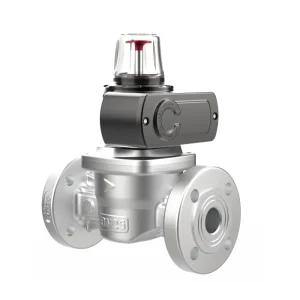
KT-XF5 Series Solenoid Valve

High-Quality Industrial Gas Solenoid Valve Normally Opened KT-XF5 Series Manufacturers, Factory

View Details
OEM KT-XF5 Solenoid Valve

OEM China KT-XF5 Series Normally Open Industrial Gas Solenoid Valve - Trusted Suppliers and Factory Quality Supplier, Factory

View Details
GTYQ-AT0505/d Combustible Gas Detector

High-Quality China GTYQ-AT0505/d Explosion Proof Combustible Gas Detector - Reliable Suppliers and Factory Solutions Manufacturer, Factories

View Details
Pipeline Gas Automatic Shut-off Valve

High-Quality Pipeline Gas Automatic Shut-off Valve Supplier, Factory

View Details
JT-AT2018 / JT-2028 / JT-AT2058 Series

High-Quality China Suppliers JT-AT2018 / JT-2028 / JT-AT2058 Series Household Combustible Gas Detectors from Factory Manufacturers, Factory

View Details
JT-AT3068 Gas Detector

OEM China JT-AT3068 Household Combustible Gas Detector - Reliable Safety Solutions from Experts, Suppliers & Factory Supplier, Manufacturer

View Details
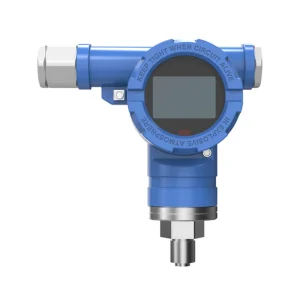
XCS-P3051 Pressure Transmitter

High-Quality XCS-P3051 Pressure Transmitter Manufacturers, Manufacturer

View Details
XF3III Series Solenoid Valve

High-Quality Industrial Gas Solenoid Valve Normally Opened XF3III Series Suppliers, Manufacturer

View Details

Our Trusted Partners

Collaborating with global enterprises to implement gas detection and shut-off infrastructures.